
Link to full article at Block Club Chicago
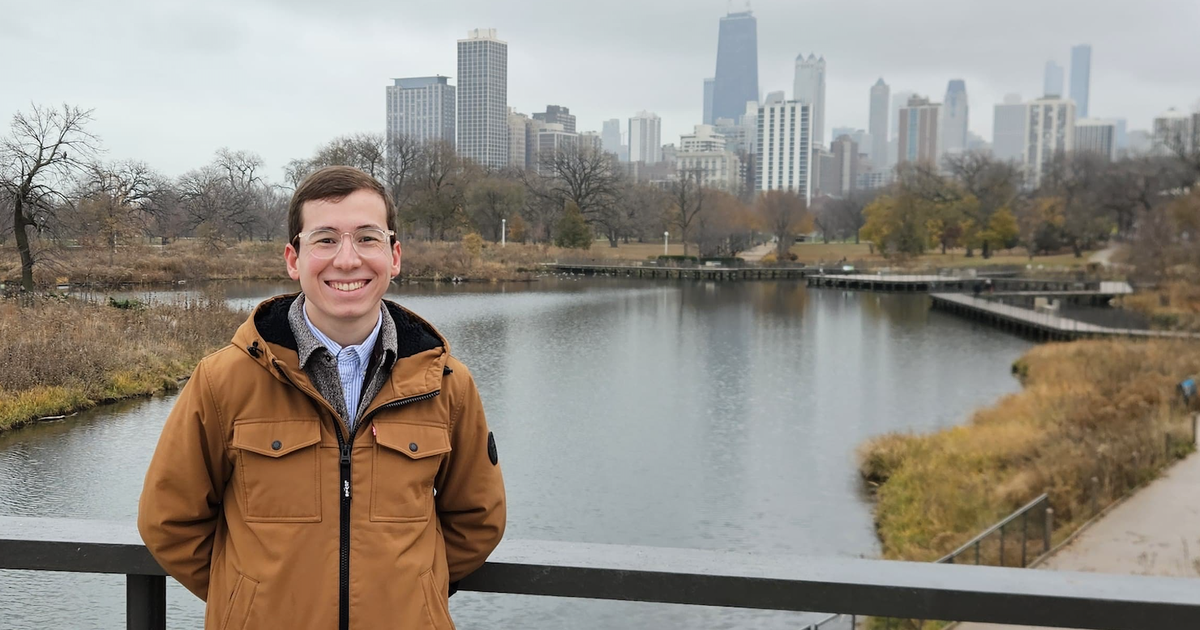
GARFIELD RIDGE — Danny Villalobos loves his lifelong neighborhood of Garfield Ridge, but the graduate student in urban planning said there’s still room to make it better for both current and future residents.
He’s trying to do just that by authoring the neighborhood’s first-ever comprehensive community plan, called Garfield Ridge 2050.
Villalobos said Garfield Ridge, a largely residential Southwest Side neighborhood near Midway Airport, is a “family-oriented community that feels like a small town.” Despite those charms, residents are facing serious “quality of life issues,” including the presence of illegal sex work, drug use and gun violence — issues Villalobos said are symptomatic of an industrial area with little foot traffic.
“It goes back to how we plan our communities,” said Villalobos, a grad student at University of Illinois Chicago. “A lot of that can be fixed if we actively create spaces that invite … the type of behavior that we want in our neighborhood.”
Those issues can be meaningfully addressed through long-term planning, something Garfield Ridge’s historical and current political makeup have prevented, Villalobos said.
Split into four aldermanic wards — including the 13th, 14th, 22nd and 23rd — Garfield Ridge is caught between conflicting political priorities, causing individual areas to “grow in very different directions,” Villalobos said. This separation has blocked policymakers from enacting a cohesive plan to transform Garfield Ridge into “the true active neighborhood that we want to see,” he said.
Villalobos, 24, created Garfield Ridge 2050 on his own time and dime as a blueprint to guide the community’s growth and development over the next 25 years. The plan outlines four major goals: improving transit and walkability, reforming housing, increasing economic vitality and prioritizing parks and open spaces.
“You need to know how to create a long-term plan so that you [can] justify every current decision you’re making,” he said.
The plan is not a legally binding document or official city policy. Instead, Villalobos said it is meant to spur conversation about a lasting vision for the community.
“This is a strong first step, and I’m happy with that,” Villalobos said.
Villalobos didn’t create the plan all on his own. Before putting pen to paper, he published a multilingual community survey asking residents what they value about the area and what they hope will change, which received 216 responses. He also spoke with local business owners, neighborhood organizations and Ald. Mike Rodríguez (22nd).
Rodríguez said Villalobos’ outreach has been vital to promoting the “actual investments that neighbors want,” as he is “engaging with working class people who don’t normally engage in these processes.”
In the survey, many residents criticized the lack of shopping and cultural amenities on Archer Avenue, one of the area’s main corridors. Villalobos’ plan now prioritizes transforming Archer into a bustling shopping destination with “a true ‘main street’ environment” while building housing above already-existing retail shops, he said.
“He comes from an asset-based approach that’s really refreshing,” Rodríguez said. “He’s looking at what’s good in the neighborhood and how we can make it better, and then looking at some of the challenges as opportunities.”
Villalobos’ plans have received some negative feedback from residents, including concerns about risks associated with increasing housing density and disrupting parking and traffic patterns. The plan, however, is doing exactly “what it’s supposed to,” he said, which is inviting residents to engage in dialogue that will guide policymakers to make the best decisions for their constituents.
“This is about the community. This is about people coming together to create the change that’s so needed in our city,” Rodríguez said.
Villalobos also met with Haley Cannon, a Southwest Side city planner with the city’s Department of Planning and Development, on Jan. 30 to formally present and discuss his plan. He said the two were both “really aligned on the overall vision for Southwest Side,” particularly in their aspirations for Archer Avenue, which the city is planning to overhaul to include bike lanes and other transit-friendly additions.
Villalobos will also meet with Ald. Silvana Tabares (23rd) later this month to present his plan and hopes to share it with Ald. Marty Quinn (13th) and the Chicagoland Chamber of Commerce, he said.
Regardless of whether policymakers or departments use his plan, Villalbos said he is satisfied with knowing he has created a “strong rough draft” for the city to have on file.
“The way I measured my own success was finishing the plan, unifying our vision, creating shared goals and including as many people in the process as possible. And I felt like I really completed that goal,” he said.